
Great Spotted Woodpecker
 |
 |
Dendrocopus Major
|
||||||||
| Great Spotted Woodpecker |
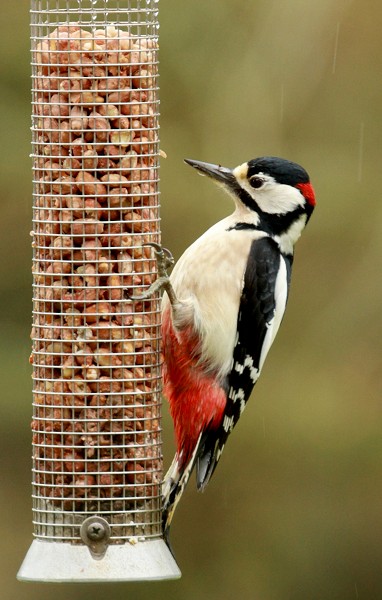
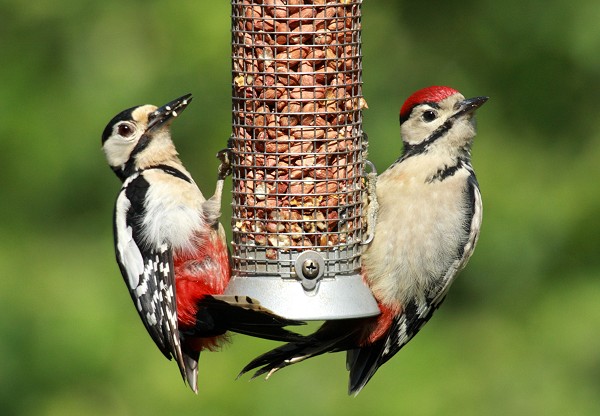
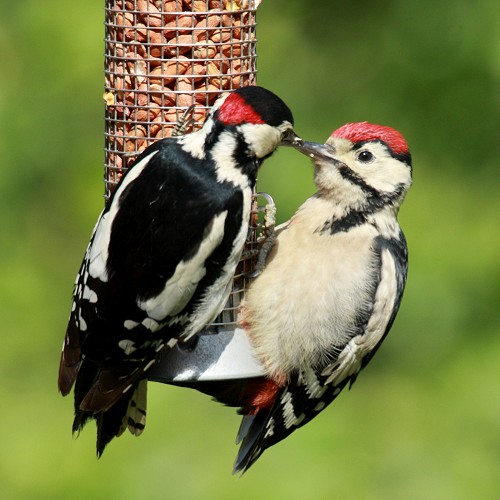
A striking black and white bird with bright red under the tail. Males have a distinctive red patch on top of the head and young birds have a red crown.
The Great Spotted Woodpecker is the most common woodpecker in Britain. It has a distinctive 'bouncing' flight but spends most of its time clinging to trees.
Woodpeckers hammer into wood with their remarkably strong beaks to get at grubs and larvae. They also have a very long tongue to reach inside holes.
Sometimes the great spotted woodpecker will snatch young birds from their nests. One tried very hard (thankfully unsuccessfully) to break into one of our bird houses this year where some blue tits were nesting.
 |
 |
|
| Great Spotted Woodpeckers (Father and Son) | ||
 |
||
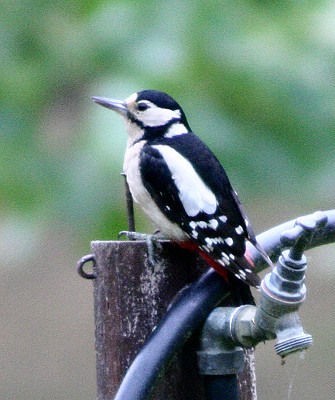
| Great Spotted Woodpecker (Female) |
Click on any of the photographs on this site to see a larger image.


